Measurement Setup
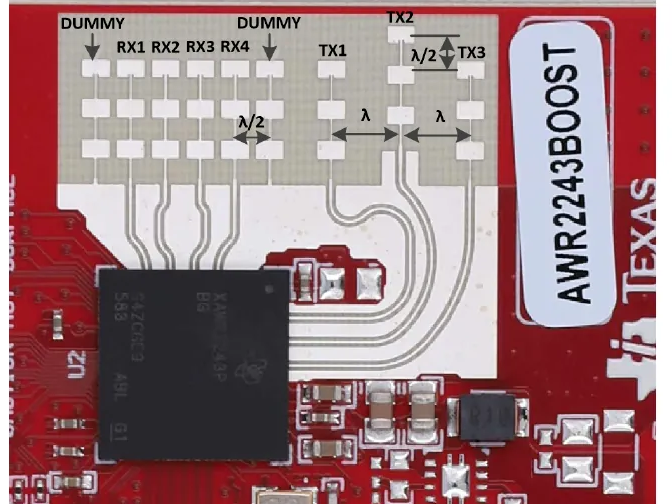
The validation was performed using an AWR2243 TI mmWave sensor in TDM-MIMO mode. Two transmitters and four receivers were used to form an 8-element virtual RX array.
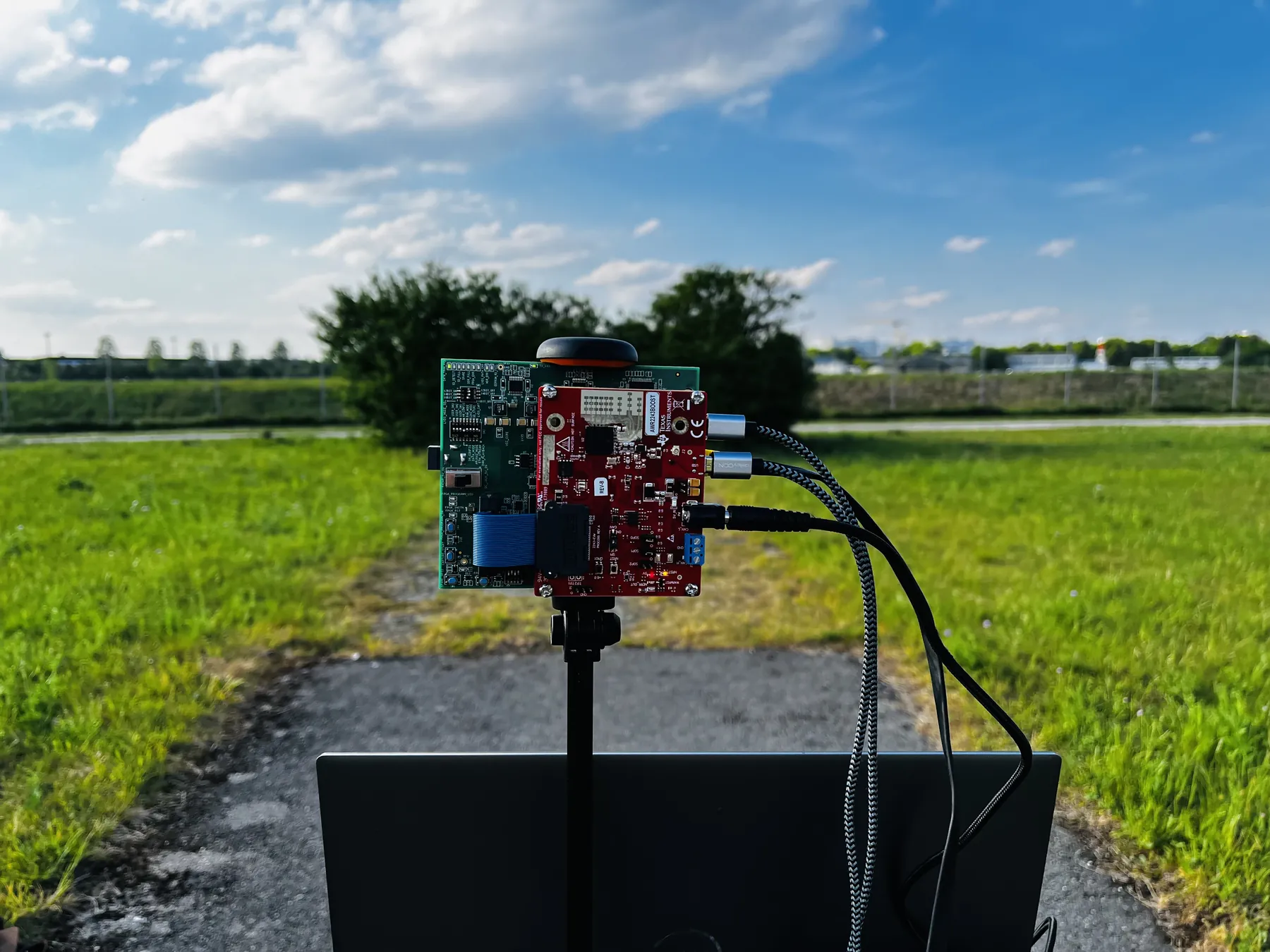
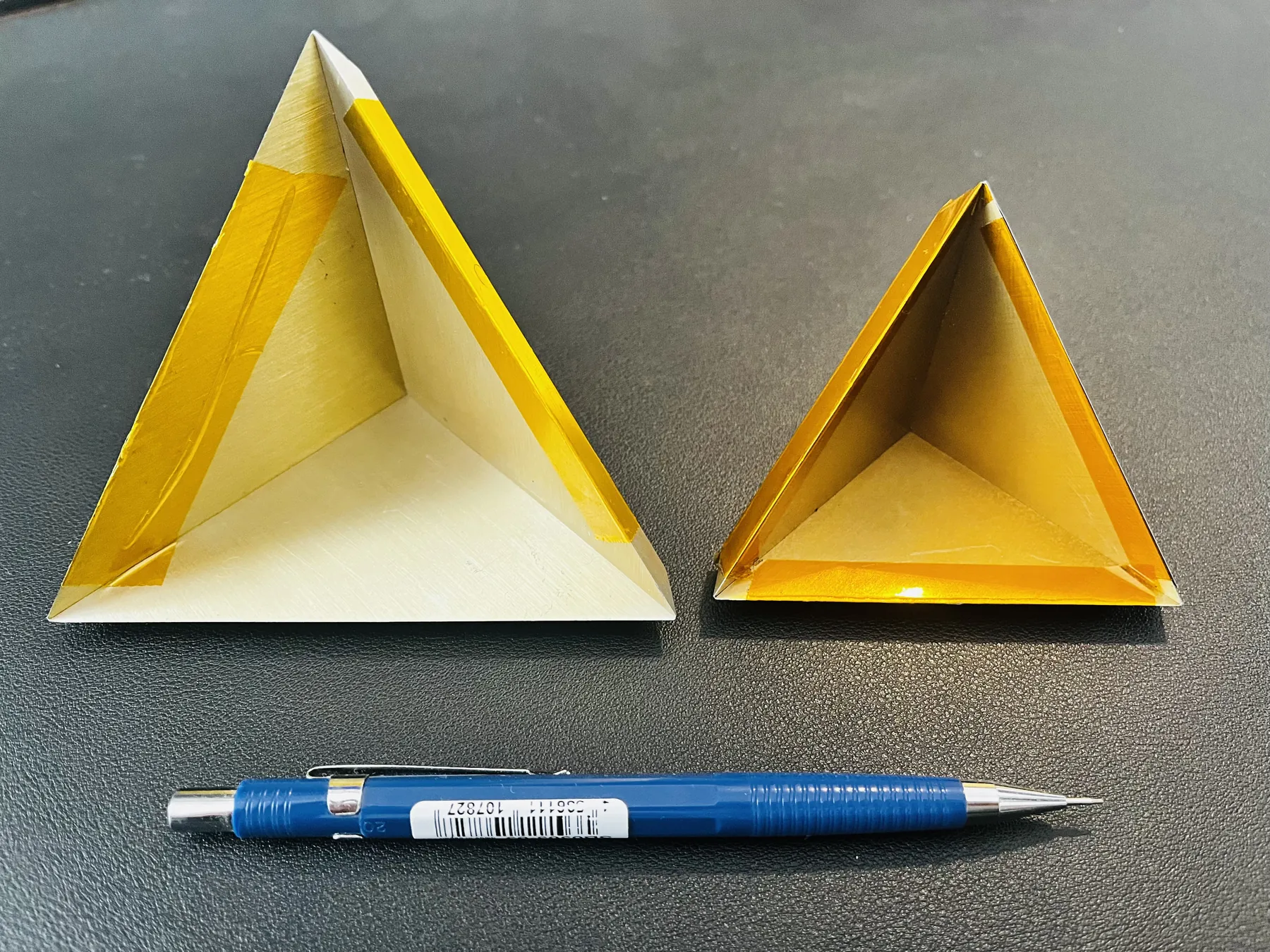
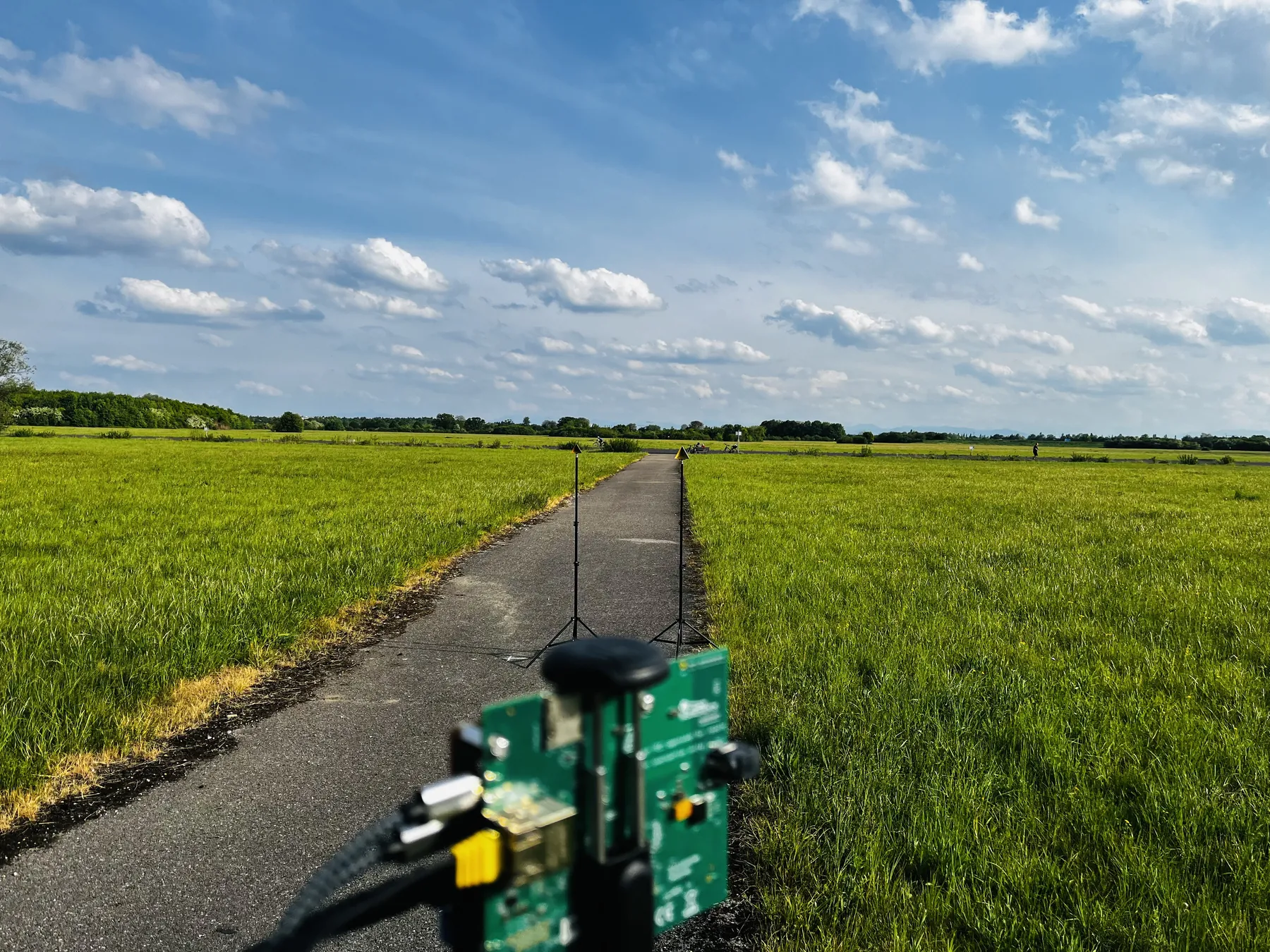
The measurement setup used two corner reflectors with different sizes. The difference in reflector size helps distinguish the corresponding peaks in the range-angle results.
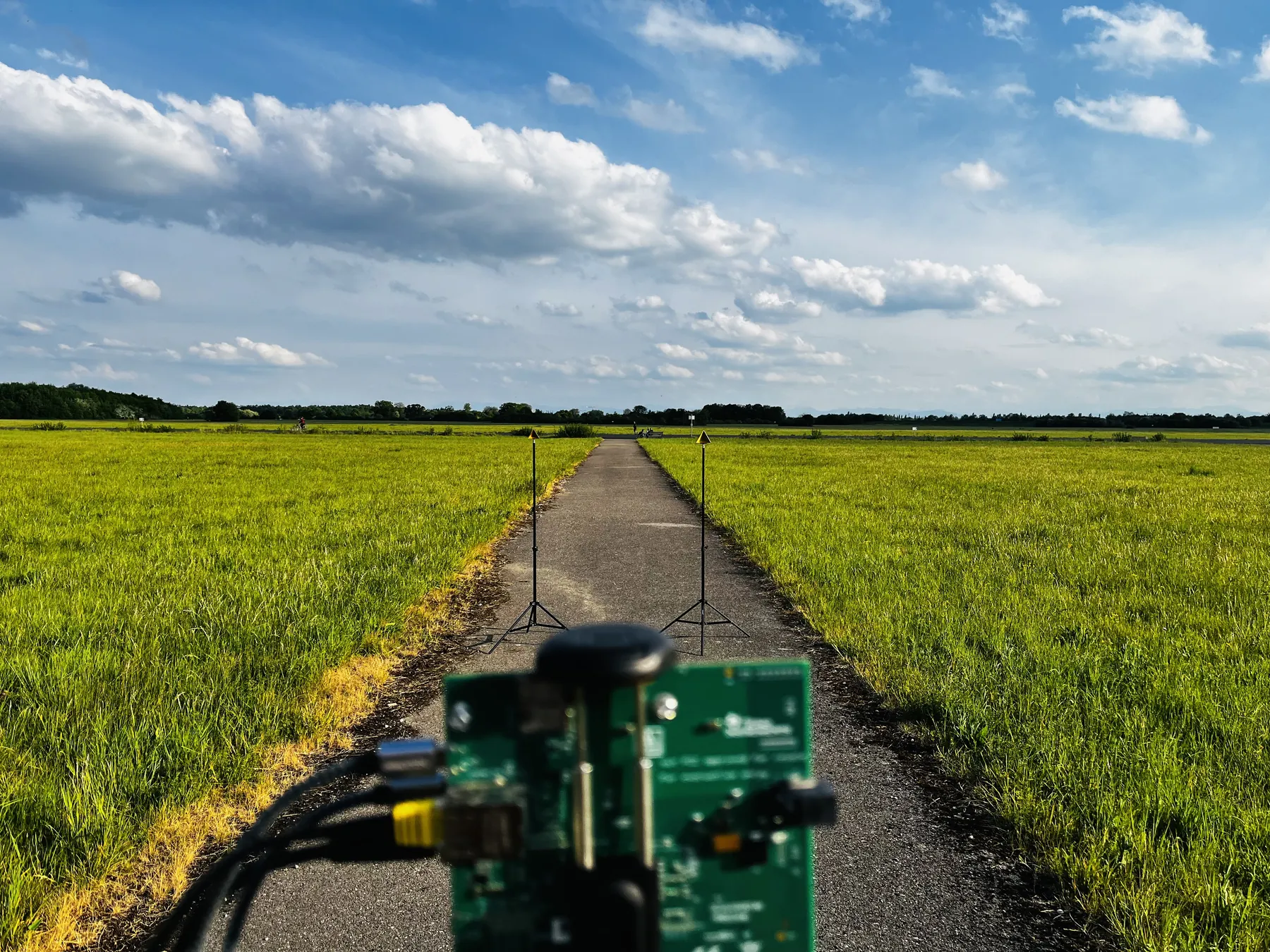
Measurements were collected in outdoor conditions to reduce multipath reflections compared to an indoor environment.
Radar calibration was done with a single corner reflector at broadside position with verification with the reflector at off-boresight.
Broadside Scenario
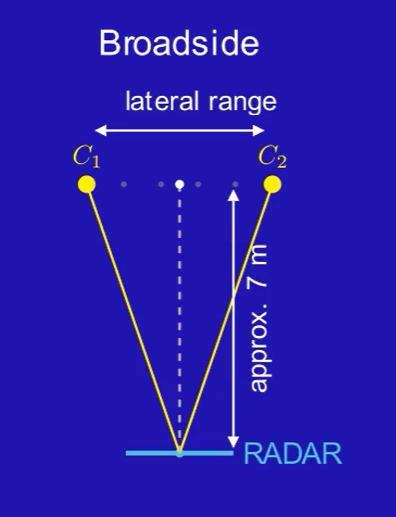
Two corner reflectors were placed in front of the radar in the broadside direction. The target range was approximately 7 m. The lateral separation between the reflectors was changed from 0 m, corresponding to a single visible reflector, up to 3.0 m with an approximate step of 0.25 m. For this geometry, the theoretical Spatial FFT angular resolution is approximately 14.84°. At 7 m range, this corresponds to about 1.8 m lateral separation.
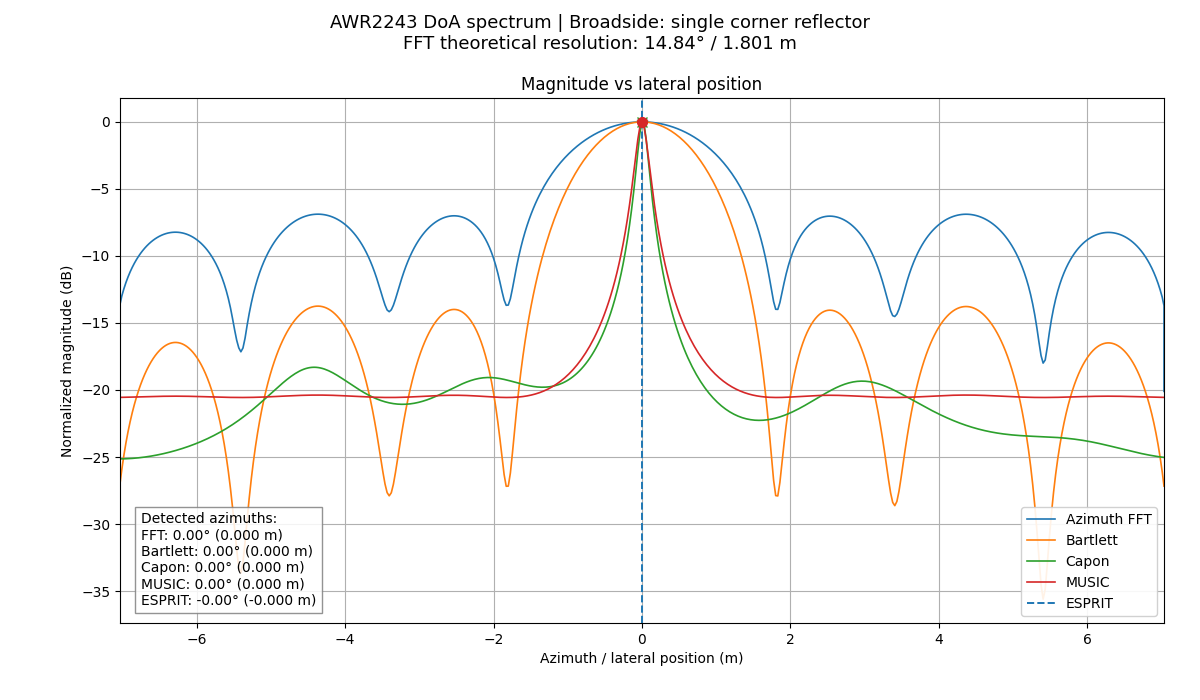
DoA estimation results for representative cases
- single corner reflector
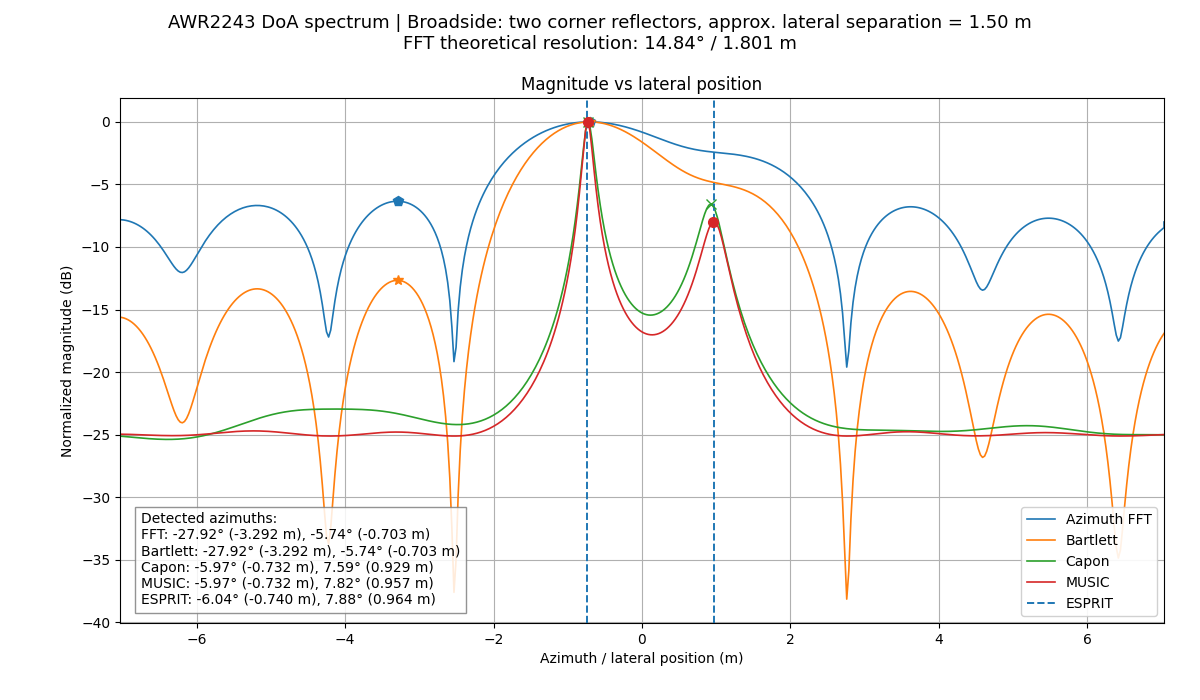
- two reflectors with 1.5 m lateral separation
- two reflectors with 3.0 m lateral separation
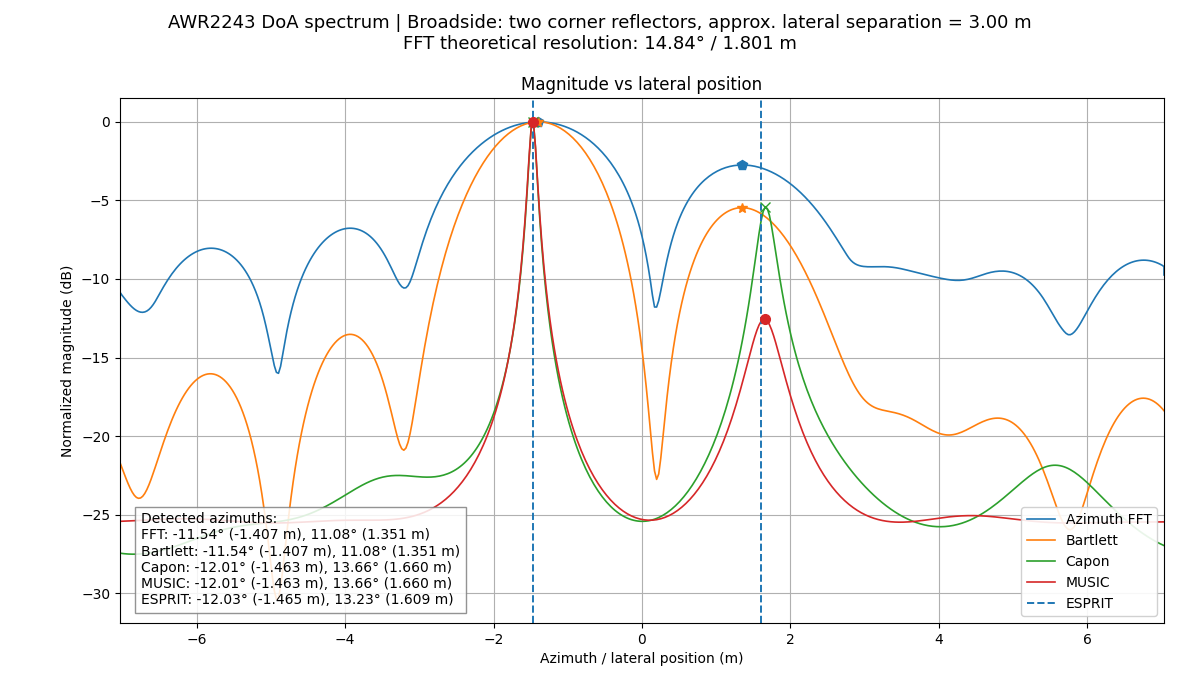
Observations: Capon MVDR, MUSIC and ESPRIT provide clean separable peaks and consistent angle estimates across the evaluated broadside cases. Spatial FFT and Bartlett have wider spectra and either fail to resolve close targets or provide less accurate peak positions. The 1.5 m case is below the theoretical Spatial FFT resolution limit. The 2.0 m case is close to the limit, while the 3.0 m case gives clearer separation for all methods.
Off-Boresight Scenario
Two corner reflectors were measured in an off-boresight configuration at approximately 6.83 m range. One reflector was fixed at approximately 44.14° relative to radar boresight. The second reflector was shifted away from the fixed reflector from 0 m to 3.0 m with an approximate step of 0.25 m. For this geometry, the theoretical Spatial FFT angular resolution is approximately 20.76°, corresponding to about 2.491 m lateral separation at 6.83 m range.
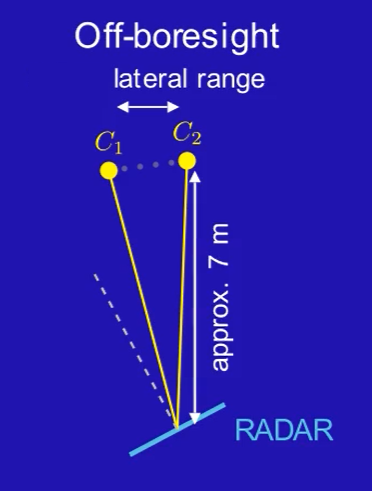
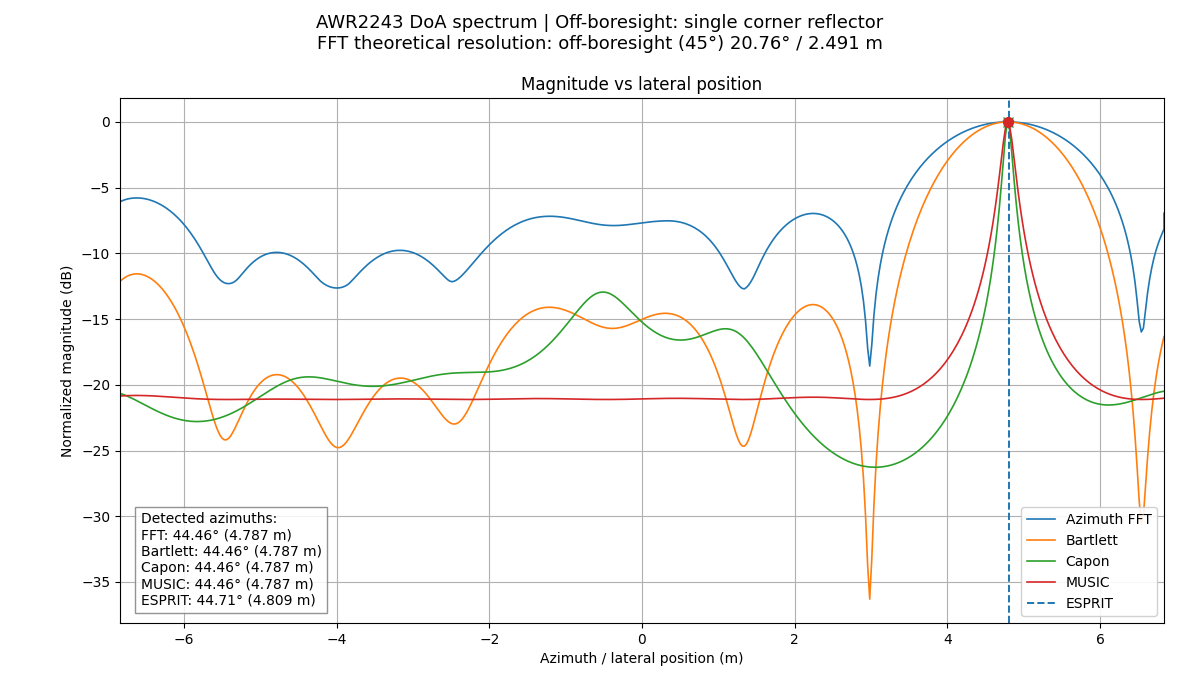
DoA estimation results for representative cases
- single corner reflector
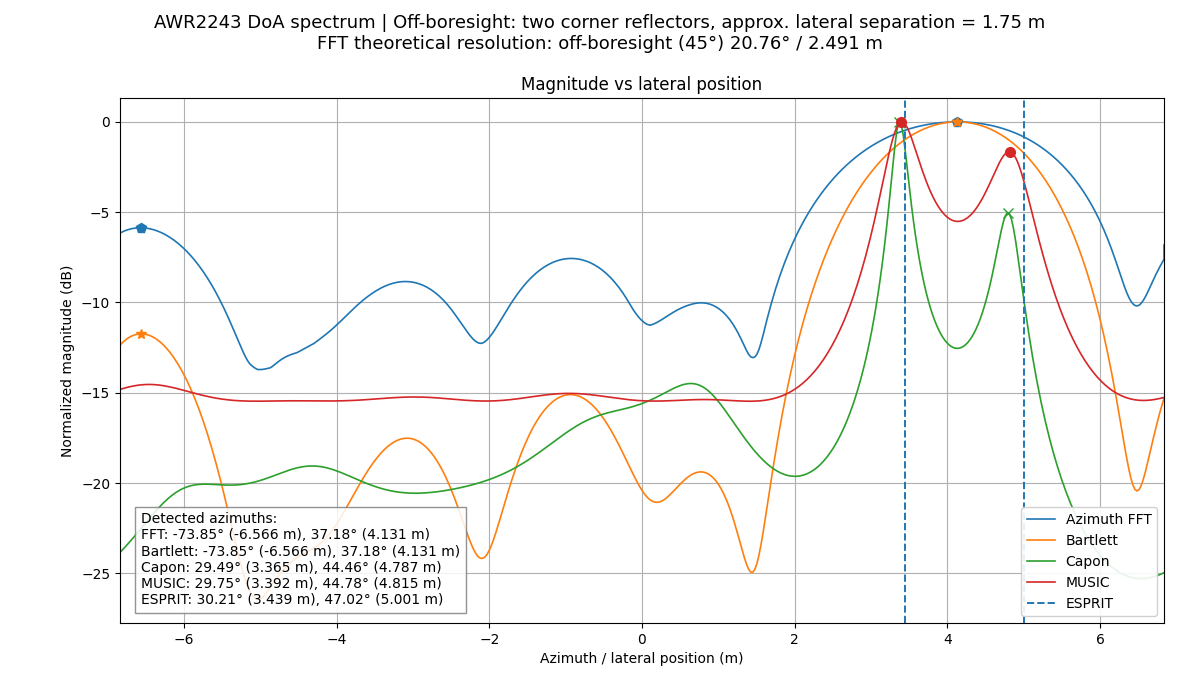
- two reflectors with 1.75 m lateral separation
- two reflectors with 2.0 m lateral separation
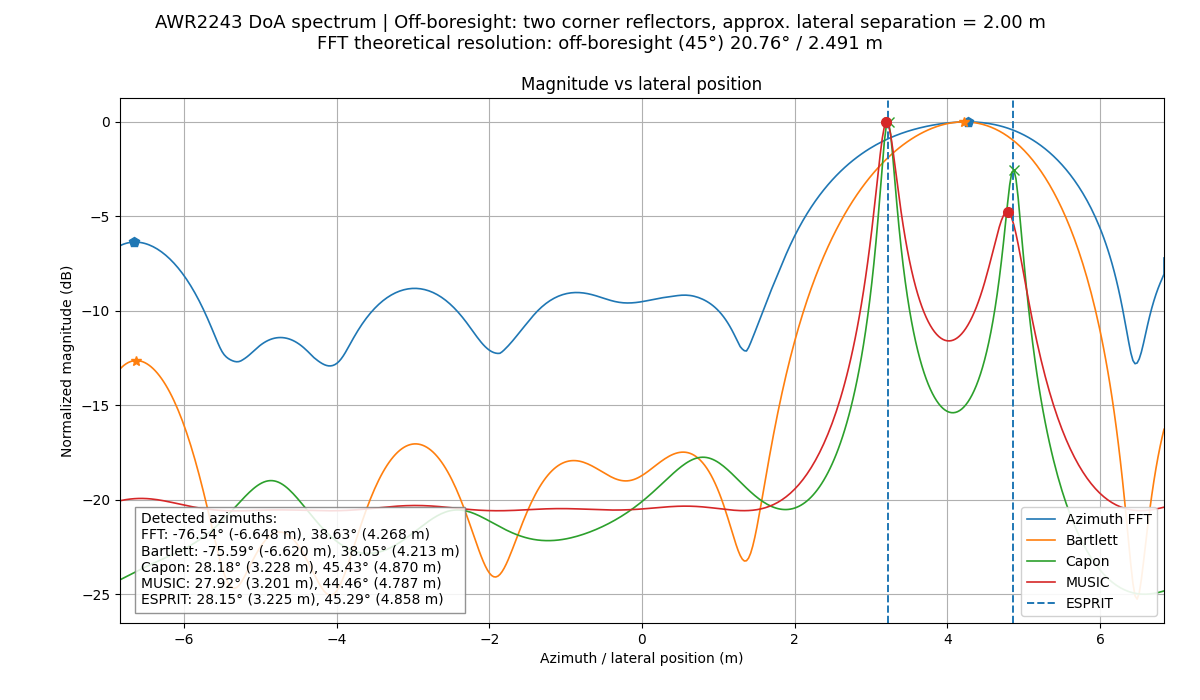
Observations: Capon MVDR, MUSIC and ESPRIT provide consistent DoA estimates across the evaluated off-boresight cases, with almost no discrepancy between them. Capon, MUSIC, ESPRIT clearly separate two targets already at 1.75 m lateral separation. Spatial FFT and Bartlett produce distinguishable two-peak results only around 2.5 m, which is consistent with the theoretical FFT resolution of approximately 2.49 m for this geometry.
Results Summary
Spatial FFT and Bartlett are useful baseline methods, but their resolution is limited by the virtual array aperture. They show wider spectra and may fail to separate close targets. Adaptive Capon MVDR and super-resolution MUSIC and ESPRIT provide cleaner peaks, better target separation, and consistent DoA estimates in both broadside and off-boresight scenarios. The experimental results are consistent with the theoretical FFT resolution limits and demonstrate the advantage of adaptive/subspace-based DoA estimation methods.